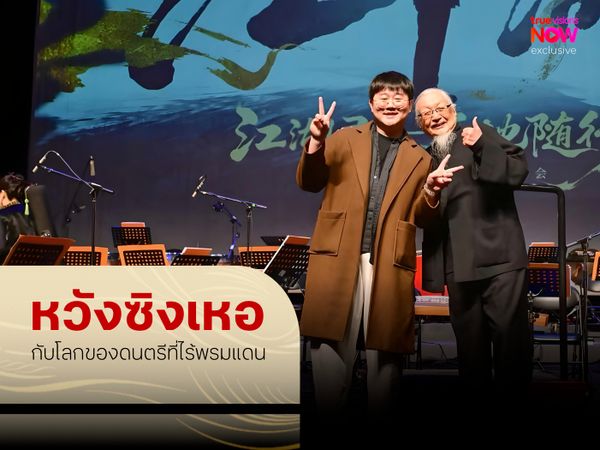
Meet the brilliant young visionary behind the epic score of Blades of the Guardians, Shui Long Yin and the soul-stirring melodies of Luo Yunxi’s Cloud Knows. Join us for an exclusive TrueVisions Now deep dive as we explore a world where music knows no boundaries.
Wang Xinghe: Music Without Borders
Meet the brilliant young visionary behind the epic score of Blades of the Guardians, Shui Long Yin and the soul-stirring melodies of Luo Yunxi’s Cloud Knows. Join us for an exclusive TrueVisions Now deep dive as we explore a world where music knows no boundaries.
From the moment his four-year-old fingertips first touched an electric keyboard—long before he could even read a single note or word—few could have imagined that boy would evolve into Wang Xinghe. Today, as a visionary producer and lead composer at the industry giant 8082 Audio, he is the creative powerhouse behind the sonic phenomena shaking the global gaming world—from the monumental scores of Black Myth: Wukong, Persona 5: The Phantom X to the highly anticipated Black Myth: Zhong Kui and much more.
But his reach extends far beyond the console. From the blood-pumping score of the epic Blades of the Guardians to the delicate, soul-stirring notes of Luo Yunxi’s 'Cloud Knows,' Xinghe is a master of emotional resonance. Despite a grueling schedule, he sat down for an exclusive with TrueVisions Now to explore a world where traditional heritage meets futuristic tech.
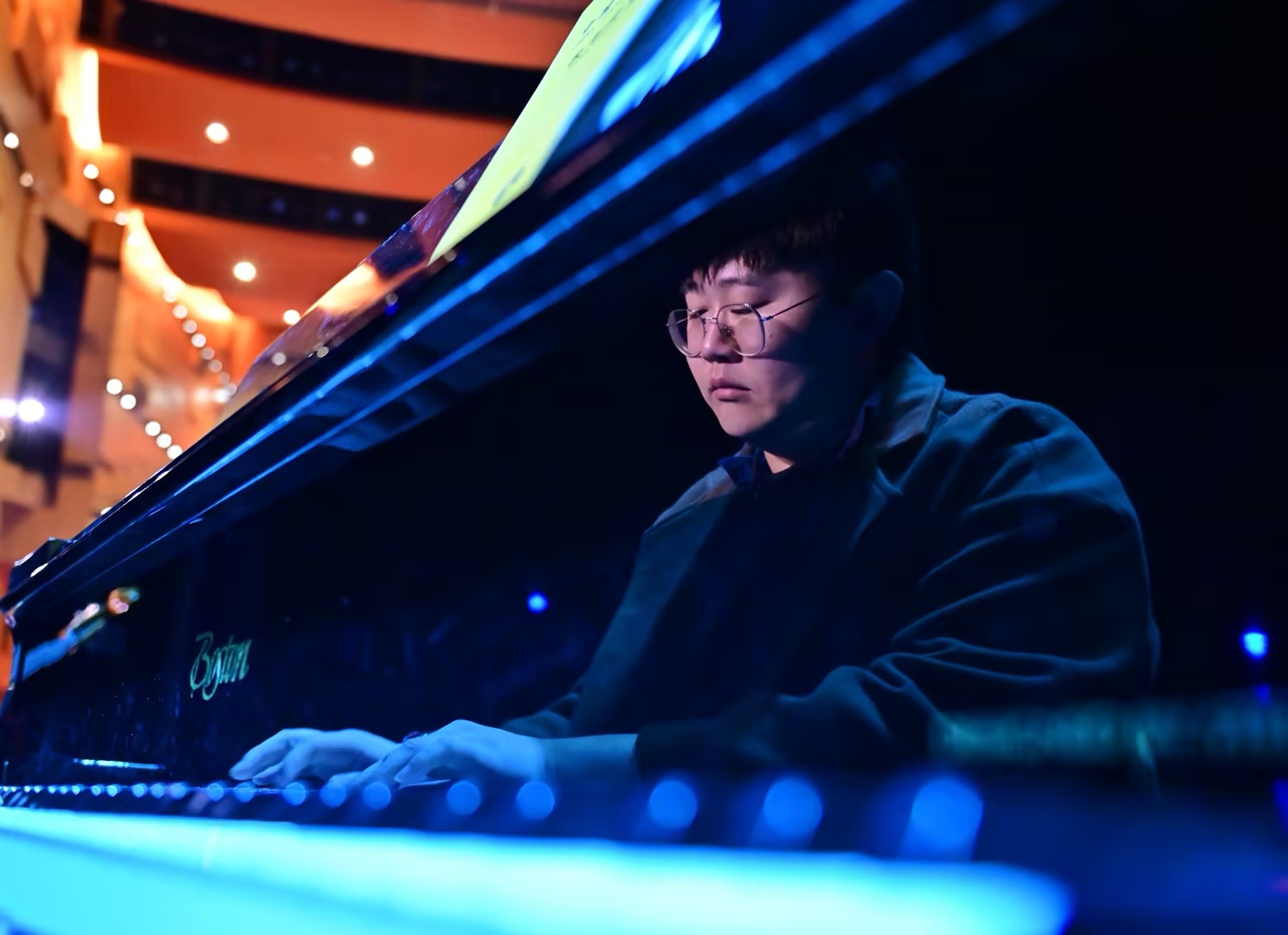 Image: 8082 Audio
Was becoming a composer your childhood dream? How did your journey into the music industry begin, and who were the artists that inspired you to embark on this journey?
I started playing keyboards at the age of four. I think my passion for composition grew out of that experience and has stayed with me ever since. My first instrument was an actual electric keyboard with lots of synth sounds and presets, rather than a classic piano—I guess that also shaped my early interest in orchestration and music production.
In my later years, I studied A-levels at a regular high school and went on to University College London for courses in mathematics and physics. But after my fourth year, I decided to devote myself to the music industry. I was lucky enough to join 8082 Audio straight away—without that, I wouldn’t have improved as quickly.
Along the way, I’ve been inspired by a wide range of composers and artists across genres, such as JJ Lin, John Williams, Rachmaninoff, and Bach. There’s still so much to learn, and maybe I’ll even be learning from AI in the next few years.
As a composer working on diverse global projects, do you have a personal process for starting each composition? What instruments or elements do you particularly love using to create your signature "sound"?
I’m pretty open to all sorts of sounds and ideas. Generally, I start with a draft containing the key motifs and structure. In the good old days, I would then begin working on a demo—percussion and drums, if any, would come first, followed by chords and counterpoints, after which I’d present the demo to my clients or partners.
Nowadays, I sometimes integrate Suno into my workflow: I finish the key ideas and feed my piano sketch to Suno for orchestration. It’s not yet good enough as a final product, but it definitely works as a rough demo, allowing me to test different directions quickly.
In an actual production, I like using traditional Chinese instruments such as the pipa or dongxiao—they add an Oriental flavor to my tracks. I also enjoy shaping different synth sounds using plugins like Serum 2. Lately, I’ve been quite into color bass and some experimental glitching sounds. I hope to have a different sonic signature for each project, so I keep experimenting with different combinations.
You have previously contributed to composing some of the main melodies for the highly acclaimed game Black Myth: Wukong. However, for the new installment Black Myth: Zhong Kui, which has just been revealed and has generated tremendous excitement among gamers worldwide, have you been more deeply involved in creating the music for this new chapter of the legend?
Yes, I worked on the first PV for Black Myth: Zhong Kui, as well as the cooking-themed one released this Spring Festival. The rest of the work is confidential and still in progress. We’ll do our best to deliver a great piece of work for the players.
The song Cloud Knows for Luo Yunxi is a deeply emotional and poetic piece. How did Luo Yunxi’s artistic vision inspire this poetic direction, and how did you both ensure the music and lyrics merged so perfectly?
Mr. Yunxi Luo and his friends wrote the lyrics; I only gave very limited suggestions. This piece reflects Yunxi’s memories of his school days, filled with warmth and touching emotion. As a producer, my job was to help present his emotions in a more musical way.
During production, we had many conversations about how he felt, and from those came every chord and every string line. Additionally, we added woodwinds to bring out that “memory flavor”—something not commonly heard in most pop songs. That said, the song is far from perfect; still, we hope the audience can feel the deep emotions beneath every line.
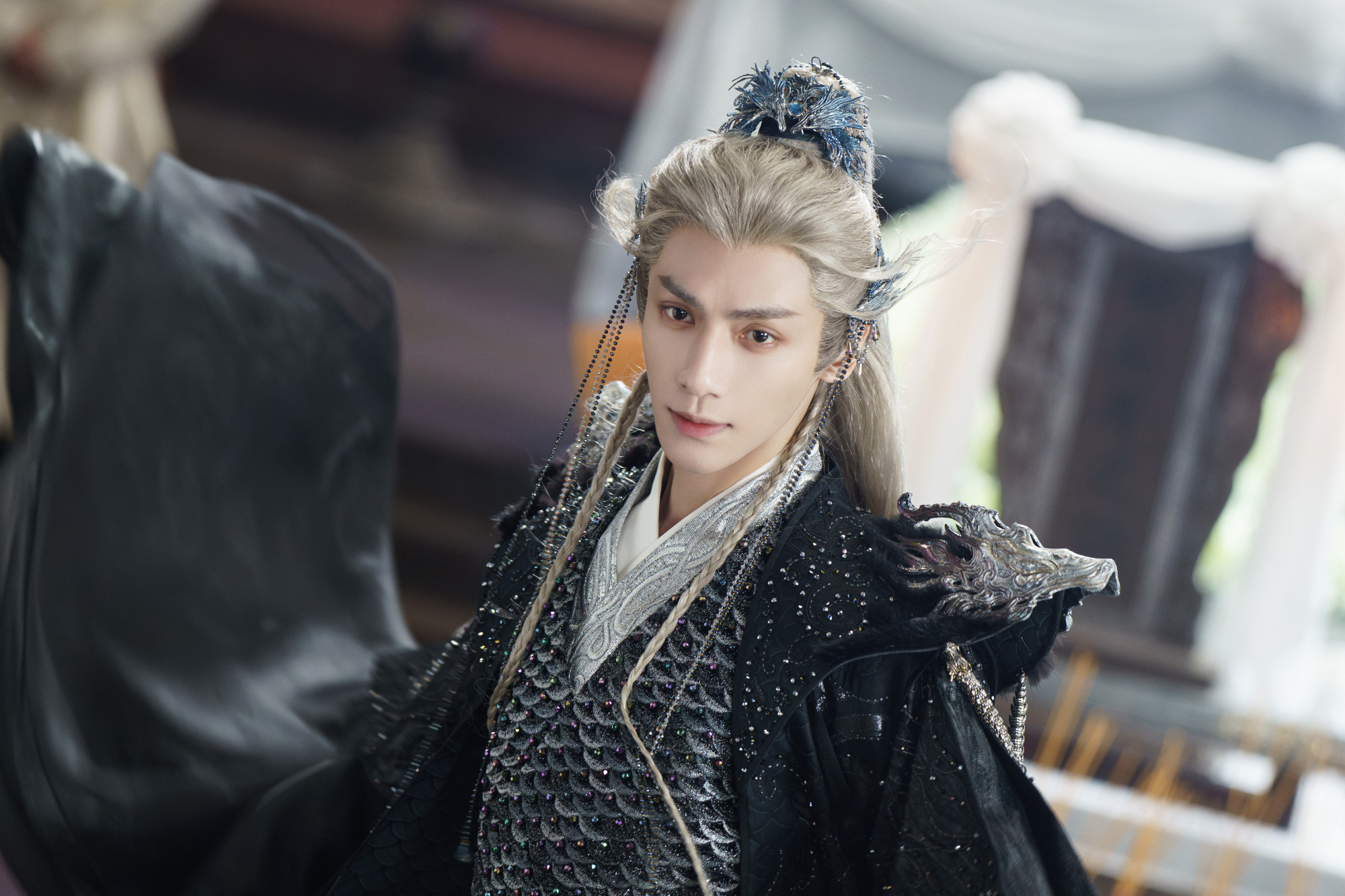 Image: Luo Yunxi Studio
In composing the song “Yi Wang” (一往), the character theme for Tang Lici in the drama Whispers of Fate (水龙吟), what specific aspects of the character or which part of the storyline served as your main inspiration? Furthermore, how did you design the melodic structure, instrumentation, harmony, and dynamics to reflect the theme of “an irreversible journey” with a sense of firm determination, without turning it into an ordinary melancholic ballad?
Our primary inspiration for Yi Wang stems directly from Tang Lici’s complete character growth arc.
He enters the story with formidable power, yet his inner world is initially self-centered. Through bonds forged with allies and confrontations with adversaries across the plot, he evolves into a braver, selfless man—not only powerful, but emotionally and spiritually whole. His final choice of ultimate sacrifice brings his character arc to its full, resonant conclusion. We engineered the track with a highly dynamic structure. The verses are lyrical and introspective, with a quiet retrospective tone: soft and steady, rooted in tender warmth.
The chorus features soaring, uplifting melodies that encapsulate the character’s unshakable resolve forged through hardship, conveying his unbreakable will and unwavering purpose.
The arrangement was presented by our talented music composer Zhai Jinyan, whose work on percussion and orchestration delivers robust structural and emotional support for the track’s narrative.
Notably, we created five total tracks for the project, and this one was selected from the pool to ensure the most authentic, fitting musical portrayal of the character.
As a composer, how would you describe the uniqueness of Luo Yunxi’s musical vision? Was there a moment during your collaboration where you felt completely in sync with each other’s vision?
I think he is a very creative and expressive artist. From what I know, he was a music producer himself in his early days—though the tools he had were limited, his ideas always came through well. He inspired me a lot with his thoughts, sometimes in a more abstract way through sharing his preferences and stories, and sometimes more directly through his demos.
He’s the kind of artist who would tweak each chord in a song and put a lot of effort into finding the “right” notes for him. I hope I truly understood his vision, and I hope we’ll stay in sync in future collaborations.
What has been the most challenging project in your career, and how did you overcome it? Lastly?
That has to be Blades of the Guardians, a film that just came out during Spring Festival. The score was done by the renowned composer William Wu (Hu Weili) and the team at 8082Audio, and I was one of the supervisors and composers. It was actually the first film where I played a key role, and I was honored to have an opportunity like this.
But it did bring me a lot of stress, mainly due to the tight schedule, communication, and project management. I don’t think there were any shortcuts—I simply pushed through all the difficulties and finished the work just in time, thanks to our music consultant William Wu and our strong team of composers. Next time, I believe we’ll do even better.
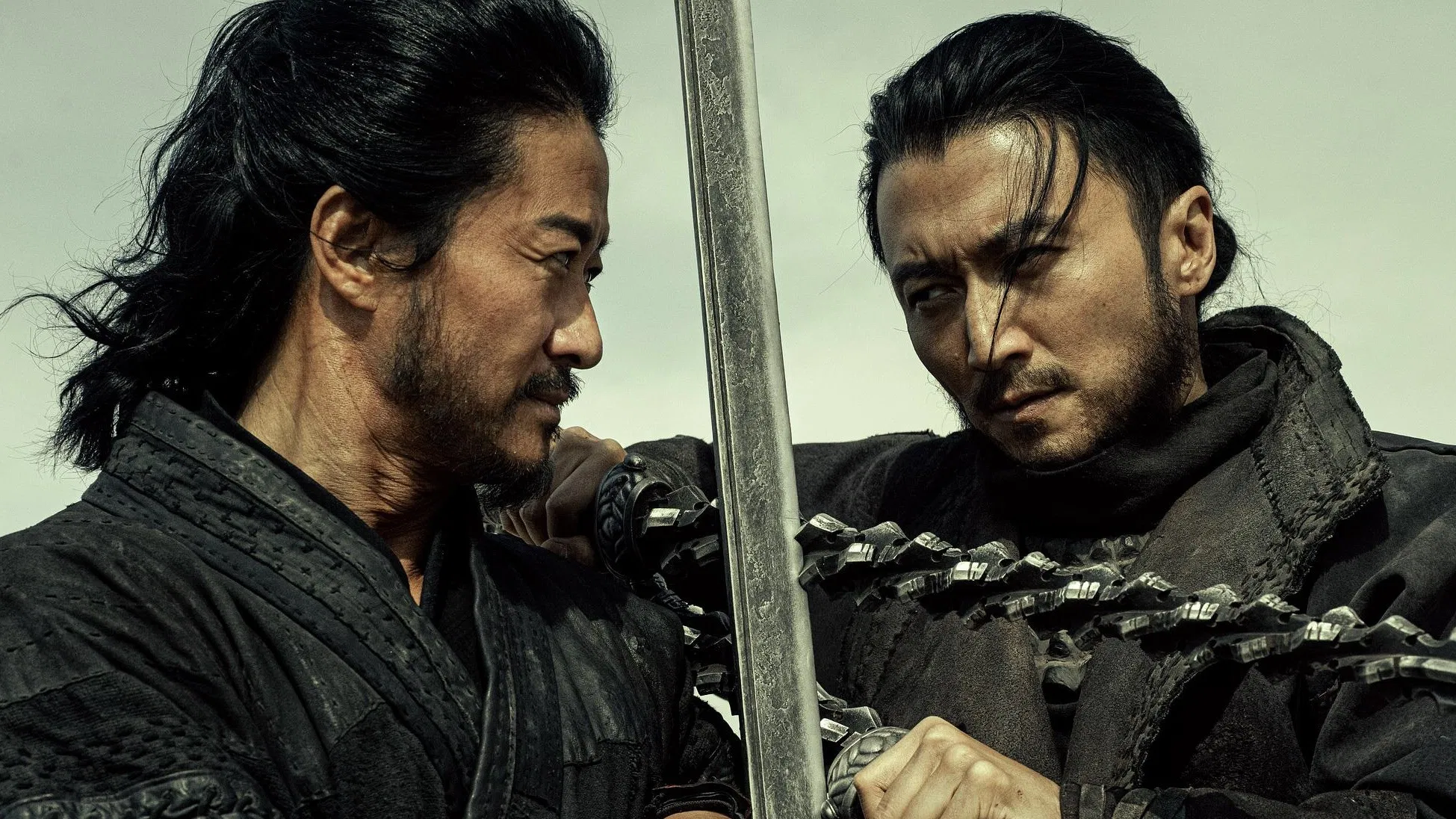 Image: Trinity CineAsia
Collaborating with a legendary maestro like William Wu (Hu Weili) is a rare privilege. What was the most profound lesson you drew from him when it came to weaving that timeless, poetic 'sword spirit' of classic Wuxia into the raw, gritty, and hard-boiled aesthetic of Blades of the Guardians? In what ways did this mentorship help you redefine the genre’s sonic identity to resonate with a modern global audience?
Prior to this collaboration, my understanding of WuXia was very limited, for a variety of reasons – not least that the golden age of WuXia was already nearing its end by the time I came of age.
It was an immense privilege to work closely with William Wu, from whom I learned a tremendous amount: not only compositional techniques, but also a philosophy of life, and the timeless spirit of Wuxia – a spirit that defies simple articulation in words.
To be frank, speaking with him, you forget the generation gap entirely. He has always maintained an extraordinary passion for new ideas, extending far beyond music into technology and new ways of living, from artificial intelligence to Mars colonization.
Mr. Wu composed the core themes for the film, and we produced these themes with a more contemporary sonic texture. The core spirit and emotional heart of the music remained fully intact: the same core identity, the same authentic essence, delivered through a fresh perspective and a new mode of expression.
We fused traditional Chinese WuXia music with epic soundscapes, augmented by full orchestration and an extensive array of synth textures, to create what we believe to be the definitive sound of the sweeping desert and its heroes.
We also designed the score to elevate the film’s narrative, and we are deeply satisfied with the final result.
What message would you like to share with your fans worldwide?
I’m truly happy that so many people enjoy my music—it’s an honor to have you as an audience. I believe composition is not just a standalone art form, but also a cornerstone for many other art forms, such as film and games. It’s always challenging and interesting to work with so many talented people in different insdustries, and I’ll keep moving forward with your support.
Stay updated on the latest sonic masterpieces from 8082 Audio at https://www.8082audio.com/
王星贺:音乐无疆
他是《镖人:风起大漠》宏大乐章与罗云熙深情单曲《云知道》背后的天才推手 。在 TrueVisions Now 这场特别专访中,这位年轻制作人将引领我们穿越音符的疆界,共赴一场无界音乐的探索之旅 。
谁能想到,那个在四岁那年、甚至还未学会识谱识字之前,指尖便初次触碰到电子琴的小男孩,如今已成长为 王星贺 (Wang Xinghe)。作为顶级音乐制作公司 8082 Audio 的核心作曲家与新锐制作人,他正是那些震撼全球游戏产业的视听盛宴背后的领军人物。从宏伟史诗《黑神话:悟空》到《女神异闻录5:夜幕魅影》,再到令全球玩家翘首以待的新作《黑神话:钟馗》等众多力作,他正以无与伦比的创造力,谱写着属于这个时代的音乐华章。
然而,他的艺术版图远不止于虚拟世界 。从电影《镖人:风起大漠》中那令人热血沸腾的宏大配乐,到罗云熙单曲《云知道》中细腻如丝的深情追忆,王星贺游刃有余地穿梭于截然不同的情感维度 。在繁忙的创作间隙,他受 TrueVisions Now 之邀,开启一场跨越传统底蕴与未来科技的无界音频探索之旅 。
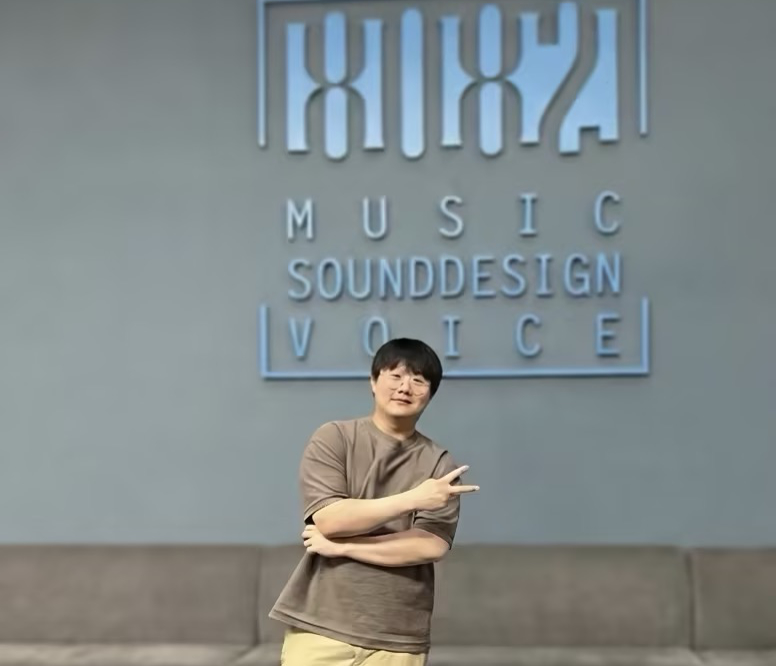 Image: 8082 Audio
成为作曲家是您从小的梦想吗?您是如何踏入音乐行业的?有哪些作曲家或艺术家激励您踏上作曲之路?
我从四岁开始弹键盘。我觉得自己对作曲的热爱就是从那时萌芽的,并一直延续至今。我的第一件乐器是一台真正的电子琴,有很多合成音色和预设,而不是传统钢琴——我想这也很早就塑造了我对编曲和音乐制作的兴趣。
后来,我在一所普通高中读了A-level课程,并进入伦敦大学学院学习数学和物理。但在我完成第四年的学业后,我决定投身音乐行业。我很幸运能直接加入8082 Audio——如果没有这段经历,我不可能进步得这么快。
在这条路上,我受到了许多不同风格作曲家与艺术家的启发,比如林俊杰、约翰·威廉姆斯、拉赫玛尼诺夫和巴赫。要学的还有很多,也许未来几年我还会向人工智能学习。
作为一名从事各种类型全球项目的作曲家,您在开始每首作品时是否有个人化的创作流程?您特别喜欢使用哪些乐器、声音或元素来创造您作品中的标志性“声音”?
我对各种声音和想法都持比较开放的态度。一般来说,我会先从包含核心动机和结构的草稿开始。在过去,我会接着制作一个demo——如果有打击乐和鼓的话会先进来,然后是和弦与对位,之后再把demo呈现给客户或合作伙伴。现在,我有时会把Suno融入工作流程:完成核心想法后,把我的钢琴草稿喂给Suno做编曲。虽然还不足以作为最终成品,但作为粗略的demo已经足够了,能让我快速尝试不同的方向。
在正式制作中,我喜欢使用中国传统乐器,比如琵琶或洞箫——它们能为我的作品增添东方韵味。我也喜欢用Serum 2这类插件来塑造不同的合成器音色。最近我挺迷色彩贝斯和一些实验性的故障音效。我希望每个项目都有不同的声音印记,所以会不断尝试不同的组合。
您此前曾参与过热门游戏《黑神话:悟空》部分主旋律的创作,而对于刚刚公布的新作《黑神话:钟馗》,这部让全球玩家都感到兴奋的新篇章,您是否在音乐创作上投入了更多的心力?
是的,我参与了《黑神话:钟馗》的第一个PV,以及今年春节发布的那个以做饭为主题的PV。其余的工作目前仍在保密中,还在进行中。我们会尽最大努力为玩家呈现一部优秀的作品。
您为罗云熙创作了歌曲《云知道》,词作如诗般优美。这种“诗意”的创作起点,是如何源于罗云熙先生的艺术愿景的?你们又是如何让“音乐”与“文字”完美融合的?
歌词是由罗云熙先生和他的朋友们创作的,我只提了非常有限的建议。这首作品讲述的是云熙对学生时代的回忆,充满了温暖和动人的情感。作为制作人,我的工作是以更具音乐感的方式帮助呈现他的情感。在制作过程中,我们有过很多关于他感受的交流,每一个和弦、每一道弦乐线条都由此而来。此外,我们还加入了木管乐器来营造那种“回忆的味道”——这在大多数流行歌曲中并不常见。不过,这首歌还远未达到“完美”,但我们依然希望听众能感受到每一句歌词背后深沉的情感。
在创作电视剧《水龙吟》中唐俪辞的人物曲《一往》时,您主要从角色的哪些特质或剧情的哪个阶段获得灵感?您如何设计旋律结构、乐器配置、和声与动态层次,以展现“一往不复”的主题,同时赋予歌曲坚定的力量,而不落入普通悲伤情歌的框架?
我们创作《一往》的核心灵感,直接来源于唐俪辞完整的人物成长弧光。他登场时便身怀卓绝实力,内心世界却最初倾向以自我为中心。随着剧情推进,在与同道缔结羁绊、与对手交锋博弈的过程中,他逐渐成长为一个更勇敢、心怀大义的无私之人——不仅实力出众,更实现了情感与精神层面的完整自洽。他最终做出的舍身抉择,为这一角色弧光画上了圆满且极具感染力的句点。我们为这首作品打造了极具动态层次的结构。主歌部分抒情而内省,带着沉静的回望质感:温柔且坚定,内核满是温润的暖意。副歌则以昂扬舒展的旋律为核心,凝练出角色历经磨难后不可撼动的决心,传递出他百折不摧的意志与一往无前的信念。本曲编曲当时由我们才华横溢的作曲老师翟锦彦操刀,他在打击乐与管弦乐编配上的处理,为作品的叙事表达提供了极佳的结构支撑与情绪张力。值得一提的是,我们为该项目共创作了五首备选曲目,最终选定了这首作品,只为确保对角色做出最本真、最贴合的音乐诠释。
作为一名作曲家,您如何看待罗云熙在音乐创作上的独特性?在合作期间,是否有那么一刻,您感到双方在音乐上产生共鸣,完全理解彼此的愿景?
我认为他是一位富有创造力且极具表现力的艺术家。据我所知,他早期自己也做过音乐制作人——虽然当时能用的工具很有限,但他的想法总能很好地呈现出来。他的思路给了我很多启发,有时是通过分享他的喜好和故事这种比较抽象的方式,有时则是通过他的demo来得更直接。他是那种会在歌曲里反复推敲每一个和弦,花很多精力去寻找属于他的“正确”音符的艺术家。我希望自己确实理解了他的愿景,也希望我们在未来的合作中能继续保持默契。
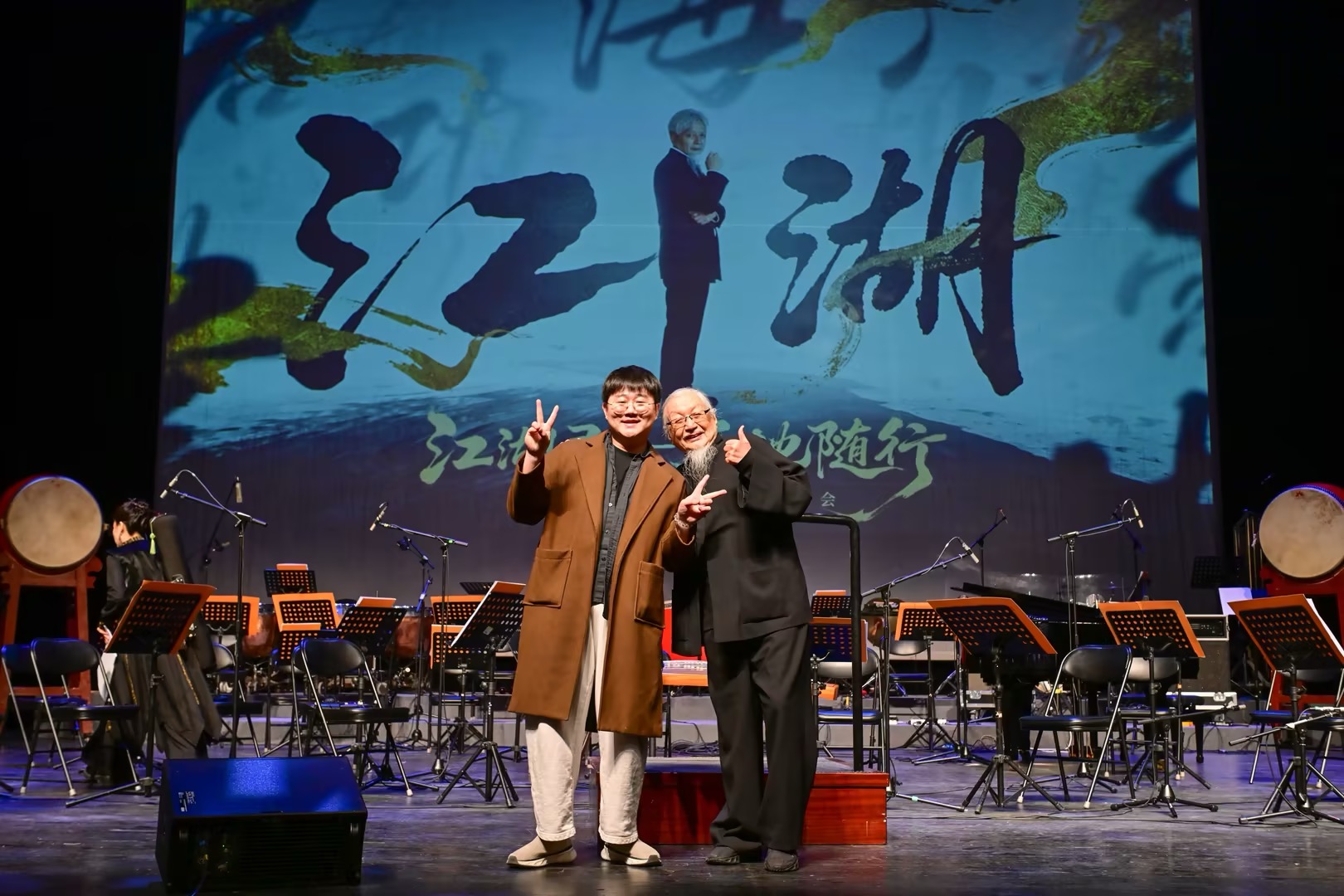 Image: 8082 Audio
在您的职业生涯中,哪个项目最具挑战性?您是如何克服障碍的?最后,关于作曲艺术?
那必须是《镖人:风起大漠》,一部刚刚在春节档上映的电影。配乐是由著名作曲家胡伟立先生和8082Audio团队完成的,我是其中的监制兼作曲之一。这其实是我第一次在电影中担任关键角色,能获得这样的机会我感到非常荣幸。但这也确实给我带来了很大的压力,主要来自紧张的工期、沟通以及项目管理方面。我不认为有什么捷径可走——我就是克服了所有困难,刚好按时完成了工作,这要感谢我们的音乐指导胡伟立先生以及我们强大的作曲团队。我相信下一次我们会做得更好。
在与乐坛泰斗胡伟立老师的紧密协作中,关于如何将传统武侠中那份‘灵动飘逸、历久弥新’的剑意,与《镖人:风起大漠》那种野性、萧瑟且‘硬派’的美学底色进行艺术融合,您从他身上得到了哪些核心启发?这种跨世代的灵魂碰撞,又是如何助力您为当下的全球观众,重塑出一种直击人心的、属于这个时代的武侠音乐语境?
在此次合作之前,我对武侠的理解其实十分有限,究其原因有很多,关键一点便是,在我成长的年代,武侠的黄金时代已然被淡化。能与胡伟立先生深度合作,于我而言是莫大的荣幸。我从他身上获益良多:不仅是作曲技法,更有人生哲思,以及武侠那份隽永绵长的精神内核——这份气韵,难以用言语简单描摹。坦白来说,与他交流时,完全感受不到代沟。他始终对新鲜事物抱有极大热忱,涉猎远不止音乐,更涵盖前沿科技与全新生活方式,从人工智能到火星探索,皆有关注。胡伟立先生为本片创作了核心主旋律,我们在此基础上,赋予乐曲更具现代感的听觉质感。音乐的核心精神与情感内核始终完好留存:底色不变、风骨依旧,只是换以全新的视角与表达方式进行诠释。我们将中式传统武侠配乐与恢弘的全景声场相融,搭配完整管弦乐编制与丰富的合成器音色,打造出专属于苍茫大漠与江湖侠士的独特听觉气质。同时,我们也以配乐烘托并升华影片叙事,最终呈现的成品,也让我们倍感满意。
您想对粉丝们分享什么?
我真的很高兴有这么多人喜欢我的音乐——能有你们作为听众,是我的荣幸。我认为作曲不仅仅是一种独立的艺术形式,更是许多其他艺术形式(如电影和游戏)的基石。与来自不同领域的众多才华横溢的人一起工作,总是充满挑战和乐趣,我会在大家的支持下继续前行。
欲了解 8082 Audio 的更多最新动态与巅峰力作,请访问官方网站:https://www.8082audio.com/
Word: Kritin Image: 8082 Audio / Luo Yunxi Studio
Be the first to know with our latest news! :
Website : www.truevisions.co.th
Facebook : Truevisions
Twitter : @TrueVisions
Line : @Truevisions
Youtube official : Truevisionsofficial
Instagram : TrueVisions Now









recommended

Entertainment
“เนเน่ รอยัล” แข่ง AGT รอบแสดงสดวันไหน เช็คเลยที่นี่!


Entertainment